TikTok • 2025
TikTok samples
A few recent projects from TikTok Ads that show how I approach complex product problems, from simplifying advertiser workflows to shaping broader product and platform direction.
Sample
TikTok Local Ads: From Enterprise Systems to Mobile Booking
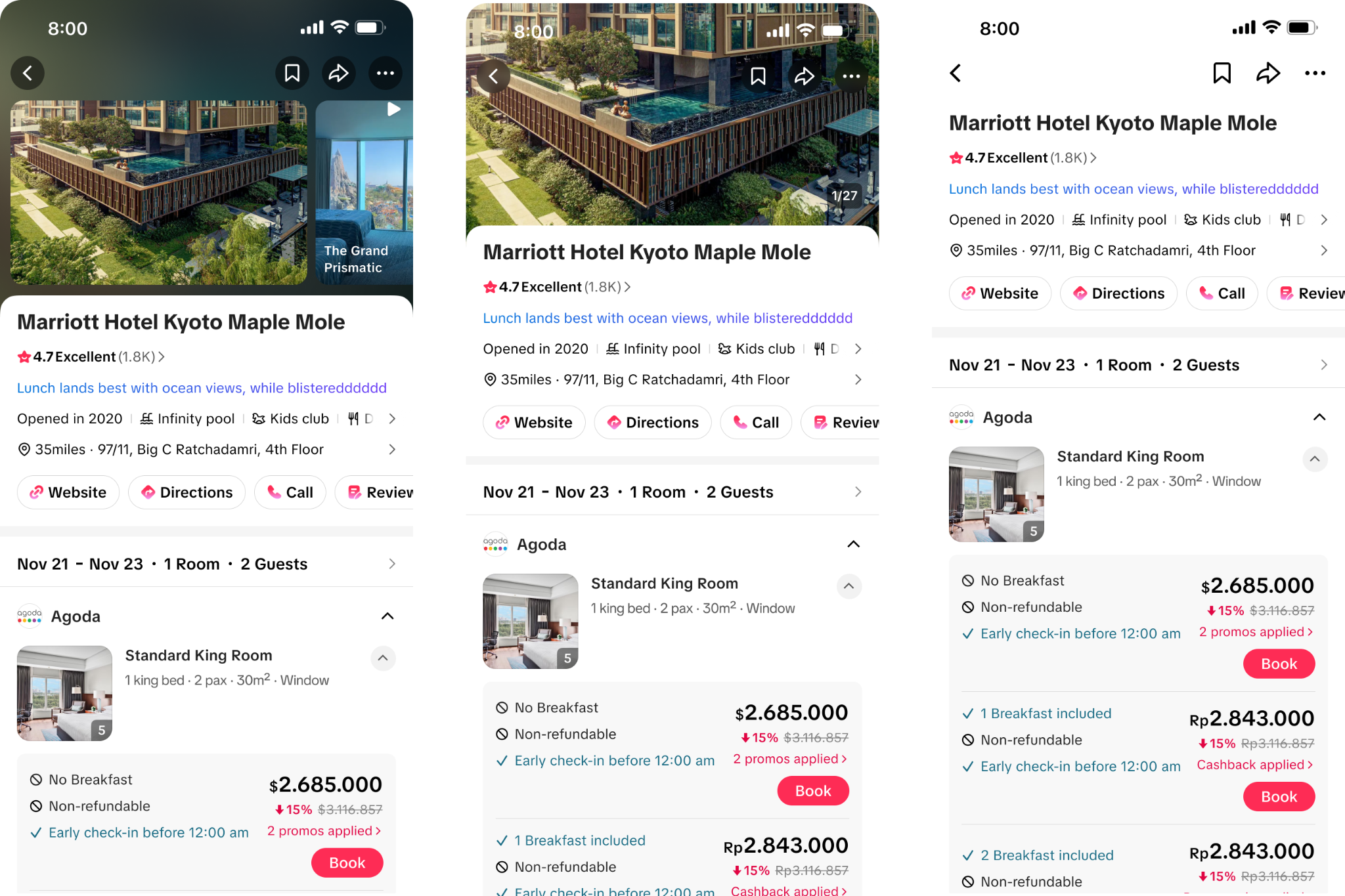
I worked across TikTok Ads Manager, TikTok GO, Catalog Manager, and external OTA systems to help define how hotel inventory, permissions, product data, and campaign configuration should connect end to end. The underlying model was fairly complex, with advertiser accounts, POIs, hotel products, room information, availability, and booking data moving across different systems and ownership boundaries. A big part of my role was making sure those enterprise workflows and data relationships could support a coherent user experience without exposing that complexity to the customer.
On the mobile side, I helped translate that system into the hotel experience people actually see in TikTok. I worked on how hotel details, room options, pricing, benefits, and booking actions should surface in a way that felt native to the app while staying consistent with the advertiser and backend data powering it. The interesting design challenge was connecting a complex enterprise model to a simple consumer experience, making sure the system did the hard work behind the scenes so the user did not have to think about it.
Sample
Designing TikTok Ads Around Advertiser Goals
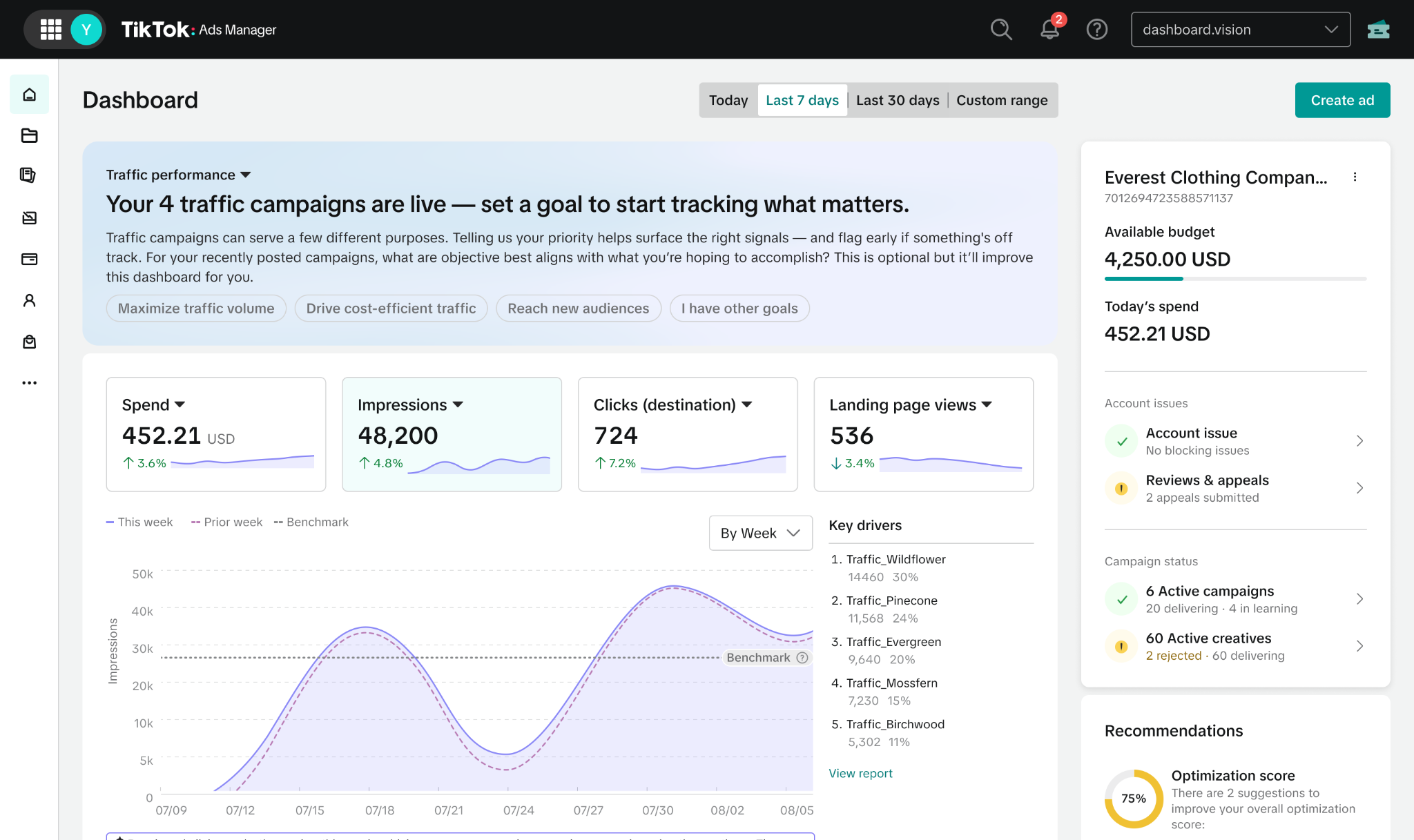
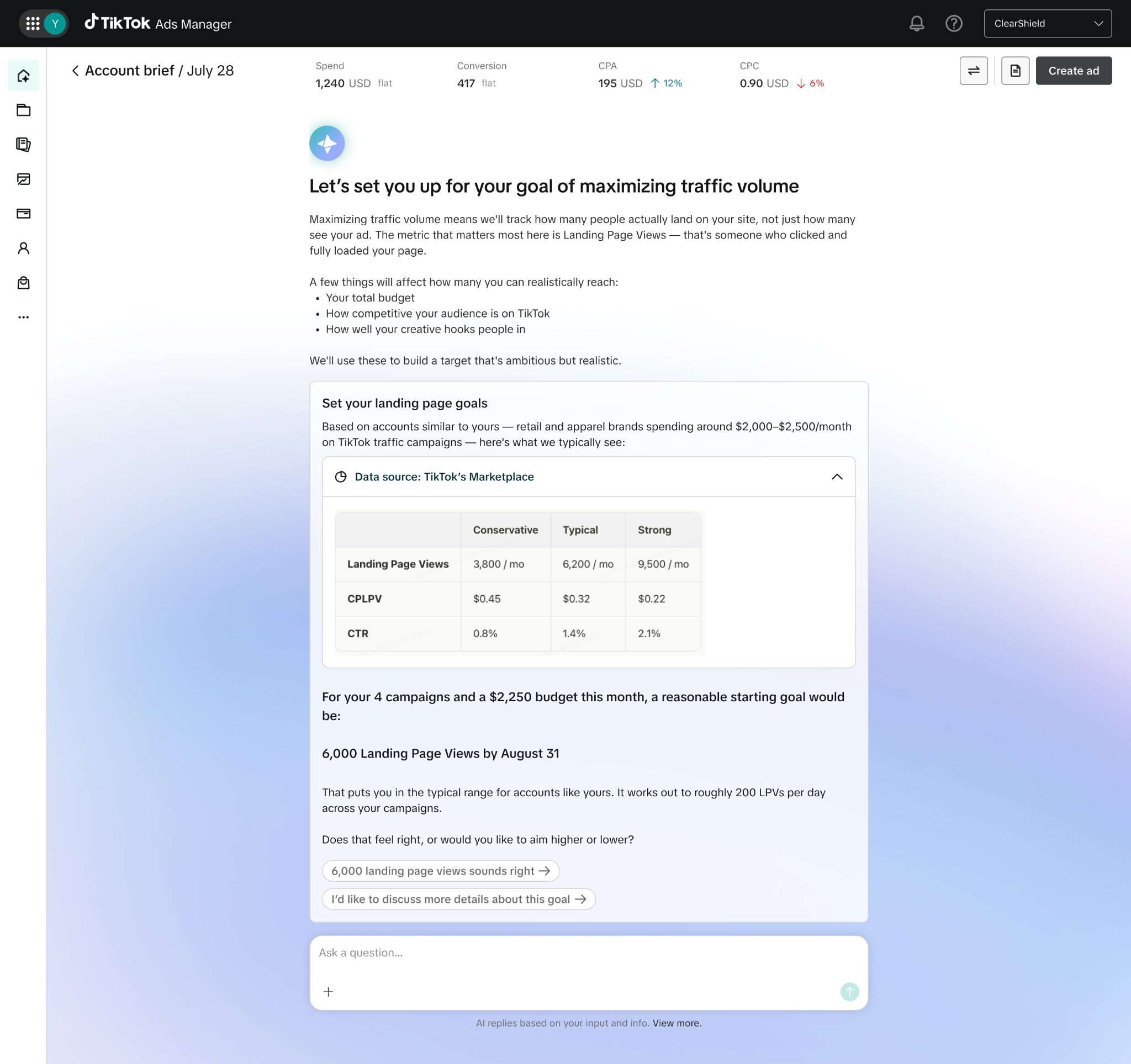
I’ve been exploring how we can shift TikTok Ads toward a goal-based model that starts with lightweight entry points and builds toward a much more guided experience over time. The first step is simple: let advertisers tell us what they are trying to accomplish directly from the dashboard, then use that signal to make the product more relevant without forcing them into a completely new workflow. That gives us a low-friction way to introduce goals, learn which ones matter most, and improve adoption before asking advertisers to change how they build campaigns.
The longer-term experience uses that goal as a layer across the product. Instead of just showing campaign metrics, the system can help advertisers understand what success looks like, suggest realistic targets based on their account and market context, and guide them toward the right next action. That can expand into a standalone AI experience and, eventually, a simplified campaign creation flow where advertisers start with the business outcome they want and the system handles more of the campaign structure underneath.